1. Introduction
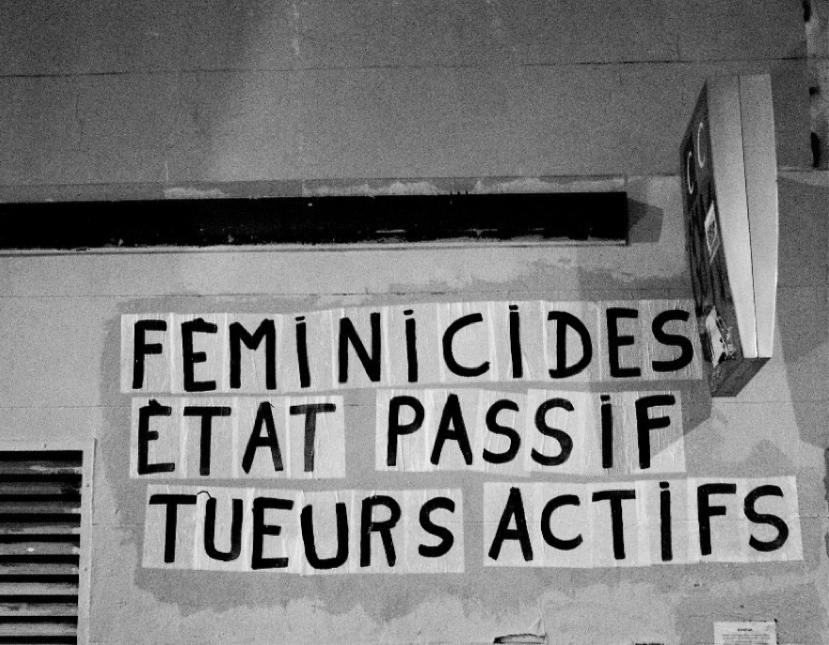
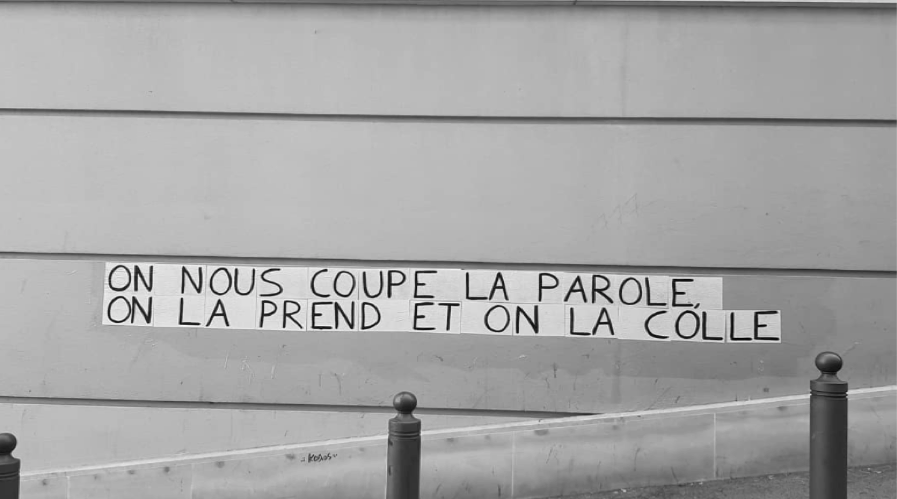
On a quiet street in Paris, around midnight, four figures dressed in black stand in front of a large plain wall. Moving quickly, one begins to apply generous strokes of glue onto the wall. The figure swiftly glides to the right to continue the pasting movement along the wall’s length. A second figure follows the first, fixing individual sheets of A4 paper onto the sticky surface in a straight line, spelling a slogan written in black capital letters. In turn, a third moves to copiously wash yet more glue over the letters, fixing the collage of letters and its message surely to the wall. A couple of metres behind them, back to the wall, facing the street, a fourth alert figure keeps watch, surveilling the immediate surroundings, ready to alert the others of the arrival of an unwanted presence. The three figures’ work done, they hurriedly pack up their materials while the lookout snaps a photo of their newest creation, before the four swiftly move on into the night. In silence, unseen by the sleeping city, from start to finish the entire process lasted less than three minutes. Yet, the collage “Féminicides, état passif, tueurs actifs” now sits boldly for the world to see, and to read.
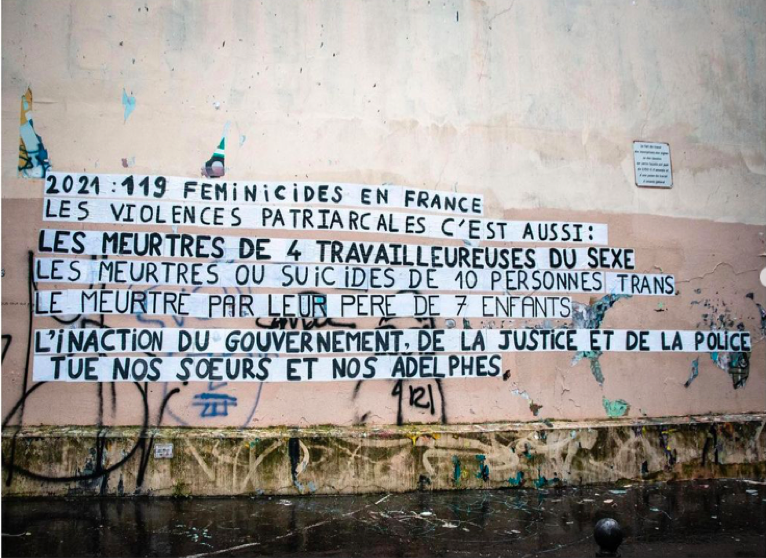
The medium of street “collage” originated in Marseille, France, in the spring of 2019 and was used initially as a way to raise public awareness about the issue of femicide – the intentional murder of women because of their gender (United Nations, 2012). In 2021 in France, violent acts of femicide resulted in the killing of 119 women (Nous Toutes, 2021). Collages are now present in more than 150 French cities, and the medium has spread across international borders, from London to San Francisco, as the Internet has extended the physical public space (Garrett, 2006).
Collages are the work of intersectional feminists named “les colleur·euses” – literally, “those who paste”, in inclusive French. The colleur·euses define themselves as “an intersectional and horizontal movement without cis men […] that fight against violence against women and gender minorities, anti-fat bias, slut-shaming, ableism, racism and classicism” (Collages Féminicides Paris, 2021, p. 14). Organized at a local level into collectives, the colleur·euses have no established leader, and operate without cisgender men.
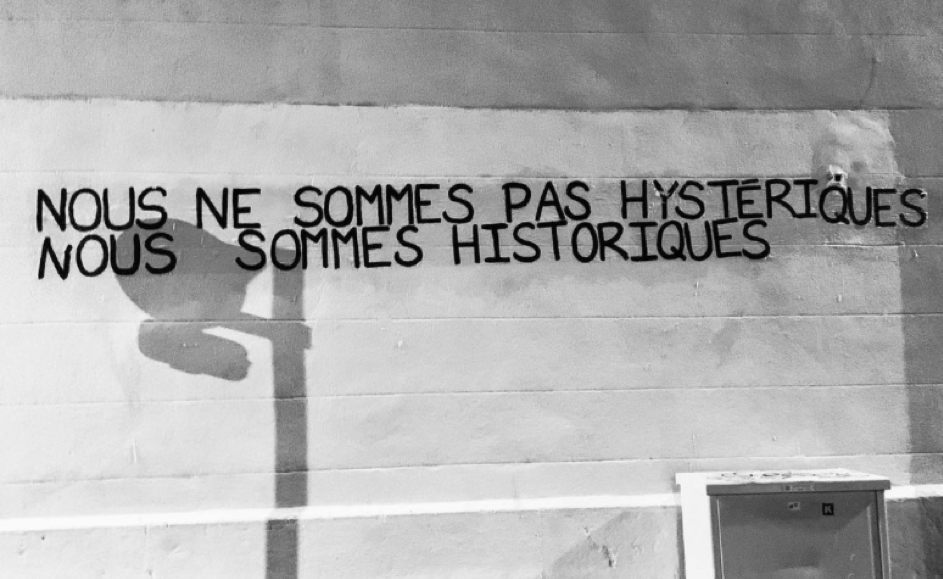
Collages represent a novel form of protest but fit within the wider historical context of French feminist struggle (Bard, 2020). Focused on the study of urban collectives of colleur·euses in France, this dissertation builds on existing scholarship of demonstrations of urban streetwise feminism within the discipline, such as in Ljubljana (Hvala, 2008), Rio de Janeiro (Pabón, 2013), or Seattle (Reed, 2005). This dissertation’s spatial focus is particularly relevant as the colleur·euses have received little academic attention within Anglo-American and Francophone geography (Monnier-Reyna, 2021). This dissertation therefore aims to fill this gap within feminist urban geography, exploring the use of feminist collages as a way to exert and enact the right to the city (Lefebvre, 1991) in French urban spaces.
This dissertation seeks to answer the following research question: How are feminist collages used to reclaim the urban in France? The term “urban” is used here to go beyond the simple physical manifestation of the “city”, but rather in reference to the experiences of space embedded within urban environments (Merrifield, 2013).
Inspired by Masood (2018), who used Lefebvre’s spatial triad (1991) to explore the mobility of women doctors in Pakistan, this dissertation will argue that feminist collages (re)claim urban space in France on three separate levels: spatial practices, representations of space and spaces of representation (Lefebvre, 1991).
In this dissertation, it is first argued that feminist collages are used to reclaim spatial practices expressed through “physical landscapes and infrastructure” (McKittrick, 2016, p. 14) and the “man-made” (Bondi, 1991, p. 161) built environment, by occupying the streets and taking up space to develop a vernacular experience of the urban. Second, the symbolic experiences of the urban are addressed as is the argument that feminist collages are used to reclaim representations of space. Third, this dissertation addresses lived experiences of urban space in France through the examples of public transport, and the urban night, as well as by reflecting upon the accessibility of the practice of collage itself.
2. Literature Review
The right to the city
Lefebvre (1991) argues that space is both a product and process of social activity. Far from being an abstract principle, space is socially produced through three separate modes – spatial practices, the space that is perceived through sight; representations of space, which reflect the interest of capital and power; and spaces of representations, being lived and experienced spaces. Lefebvre (1991) thus confers a right to the city to those – the city inhabitants – who participate in the production of urban space through the right to appropriate space, and the right to participate (Purcell, 2003). Lefebvre (1991) simultaneously saw the right to the city as a form of creative expression, a way to participate in the creation of an oeuvre – the city as a work of art that is slowly produced through the everyday labour and creativity of its inhabitants. Yet, Attoh argues that the right to the city has become the “right of many kinds” (Attoh, 2011, p. 674), as scholars have successively interpreted the concept as the right to occupy the city (Mitchell, 2003), the right to design the city (Van Deusen, 2005), or the right to define public space (Gibson, 2005). Harvey (2003) stresses that the right to the city is above all an exercise of collective power; the right to fully shape the city – and ultimately ourselves – in accordance with the desires of the collective.
The concept of the right of the city is used as a prism to analyse expressions of spatial politics in the contemporary city. Many contemporary forms of spatial politics – such as urban squatting (Vasudevan, 2015), protests and demonstrations (Shaw, 2017), graffiti (Zieleniec, 2017), craftivism (Greer, 2014; Price, 2015; Black, 2017), or yarn-bombing (Myzelev, 2015; Farinosi and Fortunati, 2018), can thus be considered as expressions of the right to the city. The right to the city is also enacted through feminist street activism. Farinosi and Fortunati (2018) demonstrate how feminist activists used knitvism (Springgay, 2010) to reclaim the city of l’Aquila, Italy, after it was left derelict after an earthquake. Pabón (2016) argues that the role of women has been underestimated in existing scholarship. In a study of graffiteras, graffiti artists in Chile and Brazil, Pabón (2013) shows how they have used graffiti to reclaim public space and unsettle public-private binaries by creating all-female crews. Hvala (2008) explores how lesbian graffiti enables women to not only enact their right to the city in Ljubljana, Slovenia, but also reclaim their bodies, and knowledge. By continuously injecting new functions and meanings to urban spaces (Hou, 2010) and fomenting a new “urban semiotic” (Zieleniec, 2017, p. 37), these enactments create new spatial practices and confer new ways of perceiving, reading and comprehending the urban.
The urban public
Fenster (2005) critiques the Lefebvrian concept of right to the city, arguing that it fails to acknowledge both the existence, and overarching influence, of patriarchy on the urban public space. Butler (2011) interrogates the very notion of the public as conceptualized by Lefebvre (1991), arguing that, far from being easily accessible to all, the public is a highly contested space. In this sense, Green et al. (1990) argue that the public space in Western society is nothing but an exclusionary fallacy, a demonstration of spatial exclusion by the dominant group – that of white, heterosexual cisgender men. Geographical scholarship has thus demonstrated that the urban public is not neutral and sterile (Fenster, 2005) but gendered (McDowell, 1993), sexualized (Bondi, 1992), classed (Bourdieu, 2018), racialized (McKittrick, 2016) and ableist (Laws, 1994).
Embodied privileges thus shape our interactions with space, creating power dynamics that simultaneously limit the movements of some, whilst facilitating the movement of others (Massey, 1993). This idea is strongly reflected within scholarship related to the geographies of fear (Bondi and Rose, 2003). Whilst studies show that women face greater threats in the private spheres of the home, or the workplace, women feel more fearful in public places (Kern, 2020). Valentine (1989) argues that the sense and experience of space is heavily gendered, with gender significantly affecting fear of violence, as well as geographical mobility in urban areas (Warr, 1985; Smith, 1987). Gardner (1994) argues that the urban public space as a territory confers more rights to men than women, as harassment and fear of male violence often restricts, or even excludes, women’s access to and activity within public space (Koskela, 1999). Women thus chart their own personal geographies of fear through mental mind maps (Valentine, 1989). These plural and dynamic itineraries are drawn by individuals in response to environmental stimuli, such as the presence of strangers in public space (Pain, 2001), the time of day (Deem, 1996; Green et al., 1990), or the constitution of the landscape, whether it be a public park (Madge, 1997) or a multi-story car park (Koskela, 1999). Fear, exerted through the perpetual threat of sexual violence, is thus one of the foundations of spatialized patriarchal control (Pain, 1991), as the urban remains a male-dominated, heterosexual space (Rose, 1993).
Yet, geographies of fear have been criticized for lack of intersectionality (Valentine, 2007; Biswas, 2019). Sjöberg and Nygren (2021) argue that examining fear and safety through the sole prism of gender oppression contributes to erasing other hierarchical power relations between women, such as class, ethnicity or sexuality. Day (1999) demonstrates that geographies of fear are often white-centric, failing to account for the higher levels of fear that minority ethnic women continuously face, including sexualized and racialized violence (Madge, 1997). Doan (2010) notes that ‘the tyranny of gendered space’ makes the urban public particularly hostile for transgendered people.
The urban night as a time-space for protest
Writing about darkness, Merleau-Ponty (1962) argues that it “enwraps me and infiltrates through all my senses, stifling my recollections and almost destroying my personal identity” (p. 283). Darkness alters our experience of space, affecting the perception of our surroundings (Edensor, 2015), eroding our bodies and their independence from other objects (Shaw, 2015). MacFarlane (2008) compares darkness with a return to wilderness, as our protected bubble of vision, filled with perceptions of depths and distance, details or colours fade away, rendering us more vulnerable to the “other” (Shaw, 2017). Yet, whilst darkness makes us a lot less sure of ourselves (Merleau-Ponty, 1962, p. 283), it simultaneously leads us to be more open to the world around us. Melbin (1987) argues that darkness increases conviviality, whilst Shaw (2015) stresses that darkness can foster greater intimacy. Darkness is thus ambivalent, as Morris (2011, p. 316), citing Bishop (2008) and Horlock (2008), writes that it creates a “temporary dissolution (…) which fosters contradictory emotions – feelings of liberation which can be uplifting but also a sense of surrender which is unsettling”.
Yet, night-time is political (Shaw, 2017). Indeed, long before the expansion of public artificial lighting, darkness was already perceived to be a time-space of transgression, mythical practices, clandestine activities, and deviance (Edensor, 2015). Given the plural dangers that it sheltered, and its absence of surveillance, night-time was viewed unfavourably by both the State and the Church, who endeavoured to spatially and temporally restrict the relative freedom that the time-space conferred (Shaw, 2017) through curfews and night-watches (Foucault, 1982). Whilst artificial lighting brought new forms of leisure, work, and commerce to the illuminated urban night (Shaw, 2017), the time-space of night-time remains at the margin of urban life. Composed of different rhythms, actors and habits, the urban night is “a second city (in itself), with its own geography and its own set of citizens” (Sharpe, 2008, p. 14) that appears once the sun sets (Edensor, 2015). In contemporary thought, the night remains the time where marginal figures, be that the flâneur or the prostitute at the apex of modernity (Hubbard and Colosi, 2015), or forms of violence and disorder, such crime, come out of the depth of darkness to inhabit the city.
The city itself has seldom been a space of harmony (Harvey, 2003). Indeed, cities have often “harbored the prerequisites for revolutionary forces of social change” (Mayer, 2009, p. 362), concentrating sites of demonstrations, strikes or protest to contest hegemonic power relations and demand equal rights (Miller and Nicholls, 2013). The city can thus be read as a site of possibility (Kern, 2020). This is even more so in France, where cities have strong associations with revolts of historical significance, whether that be the French revolutions of 1789, 1830 or 1848 (Harvey, 2003), the May-1968 protests, or more recently, the Gilet Jaunes (Yellow Jackets) movement (Shultziner and Kornblit, 2020). In France, the 2016 Nuit Debout movement, “Up all night”, reaffirmed the urban night as a locus of contemporary protest, as night-assemblies were organized on la Place de la République, in Paris, to protest against proposed labour reforms (Shaw, 2017). Urban darkness is thus socially mediated and contested (Williams, 2008). In this sense, the night acts as a resource for action, as darkness produces a bespoke space of protest, free from heightened surveillance (Graeber, 2009), and from the constraints of daily life, whilst also becoming a protective shelter for unorthodox practices that disturb the urban status quo, such as urban exploration (Garrett, 2006), or graffiti (Zieleniec, 2017).
Yet, night-time as a time space of liberation and infinite possibility is heavily gendered (Wilson, 1991; Parson, 2000). Patriarchy posits the urban night as an “essentially male space” (Hubbard and Colosi, 2015, p. 593) that “promises harm to women” (Dworkin, 1993, p. 13), leading many women to live under “a virtual curfew” (Kinsey, 1984, cited in Pain, 1997). The gendered nature of the urban night, and its subsequent repression of women’s mobilities, has been continuously challenged through political action. The “Take Back the Night” (TBTN) or “Reclaim the Night” protests that started in the 1970s sought to fight against sexual violence and the restrictions of women’s mobilities by encouraging women to occupy the streets through women-only night-time urban protests (Shaw, 2017). Both movements aimed to bring awareness to gendered oppression through occupying space at a time deemed “masculine” (Bondi, 1992). Yet, Mackay (2014) posits the movement to be exclusionary – especially for trans women and non-binary people, despite these groups being significantly affected by gender-based violence. An introspective Kern (2020) asks: “Who were we taking the night from?”, as she reflects upon her personal participation in the movement, arguing that the protests also failed to acknowledge sex workers.
A heritage of French feminist struggle
Collages represent a novel form of action but fit within a wider historical context of French feminist struggle (Bard, 2020). The use of posters to advance the cause of women began during the French Revolution with Olympe de Gouges, who pioneered posters that were used to display text in public spaces. They were in turn used by the ‘Union des femmes pour la défense de Paris et des blessés’, one of the first French feminist movements, to reclaim urban space during the Paris commune of 1871. With Louise Weiss in 1934 and the French suffragette movement, posters were also used to demand equal rights – the right to vote and, more recently, the right to bodily autonomy with the “Mouvement de Libération des Femmes” (MLF) post-May 1968 (Bard, 2020).
This dissertation thus aims to explore how the colleur·euses use feminist collages to exert “their right to the city” and reclaim their urban space. It will also explore how collages fit within a greater feminist narrative, working to unsettle patriarchal binaries and subvert spatial dominance exerted within the time-space of the urban night. Finally, this dissertation will address the corporeal and gendered experiences of the urban, showcasing how collages can be used as a form of everyday resistance.
3. Methodology
This dissertation uses qualitative methods, such as walking interviews, visual and discourse analysis, to answer the research question: How are feminist collages used to reclaim the urban in France? This chapter will discuss participant recruitment, present the methods used, as well as reflect on data analysis and positionality.
Participant recruitment
Participants were recruited through social media (Instagram). Given the illegality and the anonymity of collage participants, collectives often use social media to recruit participants and interact with external parties, such as researchers. I reached out to 150 collectives on Instagram with my personal account, sending them a generic overview of my research, written in inclusive French. This was accompanied by a research information document and contact form, which was used to contact participants directly. This content was shared internally on the collective’s respective Signal or Telegram group. The inclusion criteria were that participants should be aged 18 or older, be part of a collective of colleur·euses, and have participated in a collage session in France. The participants in this research project ranged from ages 18 to 61 and were mainly cis women (28), with one participant identifying as a trans-man and four participants identifying as non-binary.
Recruiting participants proved difficult as I conducted participant recruitment in August, at a time when students, a large demographic of the colleur·euses, were on summer break, away from the place where they studied, and often pasted collages. Originally, for logistical reasons, I had decided to focus my research on Paris and its nearby suburbs. Yet, after struggling to find a sufficient number of participants, I decided to alter my research focus and expand my geographical scope to the whole of France, in line with Cope and Kurtz’s (2016) emphasis on the importance of flexibility within the research practice. Consequently, I successfully recruited 33 participants from Paris, and its nearby suburbs (Argenteuil, Orly, St-Gratien, Pantin, Palaiseau, Ivry-sur-Seine, Vitry-sur-Seine), as well as from eight other French cities: Marseille, Lyon, Bordeaux, Lille, Arras, Amiens, Rouen and Angers.
Recruitment was also rendered more complicated by the collectives’ strong safety protocols, which advise against accepting solicitations from external parties to protect the safety and anonymity of their members. I became aware of this when I was told that my message had been shared on the colleur·euses’ national “Discord group”, and that many collectives were waiting for others to vet that I was “safe” and trustworthy before replying. Some collectives turned down my invitation all together, out of caution rather than disinterest, to remain anonymous. To guarantee their anonymity, participants are referred to by means of a randomly assigned pseudonym to avoid any unconscious biases.
Walking interviews
In the end, I conducted thirty-three semi-structured walking interviews, ranging from 18 minutes to 81 minutes, throughout September 2021. Participatory walking interviews were the primary method of data collection used in the research project. Given that the colleur·euses walk around their neighbourhoods to paste, and that human memory and identity are heavily tied to place (Anderson, 2004), conducting walking interviews appeared to be a natural choice. Indeed, walking interviews enable the researcher to readily access local knowledge about a specific environment (Evans and Jones, 2011; Parent, 2016). Solnit (2001) argues that walking is an intimate way of interacting with the landscape to reveal insights about both place and self. Walking interviews thus allow the researcher to explore the participants’ relationship with space (Jones et al., 2008), and enables the researcher and participant to benefit from the multi-sensorial stimulation of the surrounding environment (Adams and Guy, 2007). Flexible and context-sensitive, mobile methods, such as walking interviews, are thus conducive to diverse and spontaneous conversations (Lenette and Gardner, 2021), fostering participant frankness and openness (Anderson, 2004; Carpiano, 2009), as well as encouraging the co-creation of knowledge through active listening (Anderson, 2004). Walking allows us to remember and reminisce (Parent, 2016). Holton and Riley (2013) argue that the surrounding environment acts as a “walking probe”, a way to remember “pangs of memory” (Harrison, 1991), whether that be feelings, circumstances, or people that we would not have thought of otherwise.
As participatory walking interviews require a familiar route, pre-determined by the participant to be followed (Ipophen and Tolich, 2018), I gave each participant the freedom to choose their own itinerary (Clark and Emmel, 2010). This typically included streets in which they had already pasted, or that featured collages that they deemed important. This enabled the participants to lead the interview in both theme and direction and subsequently influence the research process (Duedahl and Blichfeldt, 2020). Interviews were thus often held in areas where the participants resided, or studied, which empowered the participants to share local information and experiences that were mostly unfamiliar and unknown to me (Elwood and Martin, 2000), and acted as a “rapport builder” (Carpiano, 2009, p. 267), evening out the power relations that lay between participants and myself, the interviewer (Duedahl and Blichfeldt, 2020). This led to many spontaneous interactions (Benwell, 2009), as the environment shaped our discussions time after time (Brown and Durkheim, 2009), with participants regularly halting their explanations to share a personal anecdote or a memory of a collage that arose from a particular setting. I tried to interfere as little as possible with the choice of itinerary (Kusenbach, 2003), which I hoped would resemble as much as possible the journeys taken previously when pasting. However, participants sometimes lacked the confidence or the memory to guide me on the routes that they had chosen, and often sought reassurance to make sure that their selected route was meeting my requirements. On a few occasions, I had to make suggestions concerning the itinerary because of time constraints. Organizing follow-up walks to ensure sufficient time to cover all relevant sites would have been useful, but the logistics of doing so often proved difficult.
Riley (2010) has argued that conducting interviews “in place” helps to eliminate the initial awkwardness of conventional face-to-face interviews, and this was the case, as participants often deliberately suggested meeting points that allowed us to directly start the interview without awkward small talk en route. Deciding on the starting point beforehand allowed participants to position themselves as “co-researchers” (Lenette and Gardner, 2021, p. 306), while I stepped back to walk alongside, simply listening and observing (O’Neill et al., 2019). Conversations also flowed naturally, with certain actions, such as waiting at pedestrian crossings or turning a corner, acting as natural pauses (Hall et al., 2006), anchoring the interview in the everyday. Whilst I strove to replicate everyday conditions, it was important to remember that most pasting occurred at night. However, for security and logistical reasons, all walking interviews occurred during the daytime.
Having obtained informed consent from all participants, I audio-recorded my interviews using a hand-held voice recorder, or my telephone. Whilst this was originally done to allow me to focus fully on the one-to-one interaction, recording presented a number of challenges. Despite following the recommendations outlined by Garcia et al. (2012) for successful audio-recording, technical issues in verifying the correct operation of the device were a constraint, which periodically shifted intention away from engaging in dialogue with the “co-researcher”. Participants often adapted their itinerary to accommodate the use of the voice recorder, often changing the itinerary to routes with less street noise.
Are you sure that you’re going to be able to hear ok with the cars? Let’s maybe leave the boulevard.
— Sofia, Marseille (2021)
“Go-along” interviews also foster embodied understanding (Nash, 2010; Simonsen, 2013; Duedahl and Blichfeldt, 2020). Indeed, walking an average of 20 kilometres a day alongside the participant, I was able to feel the physical exhaustion that comes from participating in collages that was often mentioned during interviews. For some interviews, having travelled from Paris to another city, I would walk all day carrying a heavy rucksack full of belongings, which constrained my mobility. Yet, this allowed me to gain insight into the physicality of collages, as the colleur·euses carry heavy backpacks with buckets of glue, paintbrushes and paper during sessions. This is something that a traditional sit-down interview could not have fully conveyed (Butler and Derrett, 2014). Whilst the able-bodied perspective is certainly predominant in mobilities research (Parent, 2016), I had until then underestimated my own able-bodied privilege. As a fast walker, I frequently had to change pace to adapt to that of participants. In some cases, the inherent ableism of the method used meant that I had to change my protocol to avoid excluding participants because of mobility concerns (Evans and Jones, 2011). For instance, a participant, who was mobile but recovering from a serious injury, felt more comfortable carrying out the interview sitting down in a café, rather than walking. Retrospectively, it is possible that some people might have declined to participate because of physical limitations.
Citing Jones et al. (2008), Lenette and Gardner (2021, p. 7) argue that movement can increase the “unevenness and messiness” of data collection, and this was certainly observed in this research. For instance, some environments were more walkable than others, whilst the weather also frequently disrupted “the go-along” model. Some participants embraced the rain and the high winds on our walks, but many asked to reschedule because of forecast bad weather, or simply suggested to halt the walking interview and continue the conversation in a café or standing under an awning. Questions of privacy also challenged the “go-along” method, as although interviews took place in public places, due to the nature of city life, our conversation could potentially be overheard in quieter streets. For example, during an interview in Marseille we noticed a police car parked ahead, along the pavement we were walking on. Although this situation had not been discussed prior to the interview, both the participant and I instinctively stopped talking until we had passed.
Visual and discourse analysis
As collages are visual in nature, a decision was taken to supplement the interview data with visual and discourse analysis. Acting as both a translator and a mediator of the world around us (Rose, 2016), visual analysis not only enables reflection on that which is usually “taken-for-granted”, uncovering Bourdieu’s habitus (Sweetman, 2009), but also expresses subjectivity as the affective, the sensitive or the emotional tend to be best conveyed through visual means (Banks, 1995). Visual analysis was carried out by viewing and photographing the collages that my participants and I would encounter whilst walking, as well as by examining photographs of collages that participants had mentioned during the interviews. These were either via the collectives’ Instagram account, or directly provided after by the participants themselves.
Aware that language is not neutral, and that space is constituted through discourse (McDowell, 2018), the slogans, or messages, displayed through the collages were studied and analysed. This was done by questioning the deliberate choice of wording and placed emphasis, whilst interrogating their spatial placement.
Field notes
To undertake the fieldwork, a considerable amount of time was spent commuting on public transport to meet participants: on trains travelling across France from one city to another, and in buses and underground rail systems. This commuting time offered an opportunity to reflect on the completed interviews. In these moments, observations and thoughts were entered on the Notes iPhone app. Just as Elkin (2021) used her iPhone to document her Parisian commute, my iPhone proved to be an incredibly convenient portable research diary in which to collate the day’s research findings: photographs taken during interviews, personal observations as well as passing thoughts. For example:
29/09/21 – Saw K today, who commented on the brand of my t-shirt, saying that it must have been expensive. I told him I’d got it in the sale. I’ve worn it for a couple of interviews, but now that I think of it, it’s probably not great – I’ll make sure to not have any brands on display from now on to be as plain as possible.
Analysis
All of the interviews were conducted in French, which I then transcribed verbatim. Not being constrained by specific coding guidelines (Crang, 2005), I hand-coded the interview transcripts into themes, refining and modifying the categorizations, to link them to a wider context. This facilitated the translation into English. The translation sought to reflect the nuances and subtleties expressed by the participants through their choice of words and syntax. Of course, there are limitations to this: translation inevitably constructs a separate discourse in itself. Some of the French vocabulary that was commonly used by participants, such as “femmes et minorités de genre” (women and gender minorities), does not have an adequate equivalent in English. When such situations arose, a decision was taken to create my own terminology by transferring the French term to English.
Positionality
The viability of the research project was incumbent on myself presenting not only as trustworthy but as a young female, as the colleur·euses collectives operate exclusive of cis-men. Being a French national and French-speaking, as well as a student in my early twenties, my personal profile often matched that of the participants interviewed. Consequently, participants often confided in me, sharing sensitive, intimate, and personal experiences. Oakley’s (1979) work about overlapping roles in feminist research strongly resonated with my experience. Indeed, even though carrying out walking interviews meant that I took on the role of the researcher, I also remained a cis woman and a feminist throughout, meaning I often felt concerned and touched by the stories recounted by participants. In this sense, this project bears “an intimate relationship” (Oakley, 1979, p. 4) with my own life. Valentine (2002) argues that the position of the researcher as an “insider” or “outsider” is not set in stone, but rather evolves through the research process. This was certainly the case throughout my encounters as shared lived experiences such as street harassment, knowledge of feminist jargon or inside jokes, sometimes accorded me the sense of being an “insider”, although I ultimately remained an “outsider”, having never participated in a collage session.
The research adopted “a participatory model” (Oakley, 1981), choosing to share personal information and experiences with participants when appropriate, to build rapport and to foster greater reciprocity (Hesse-Biber, 2014). This builds trust and empathy (McDowell, 2018), and evens out the power dynamics between myself and participants (O’Connor and Madge, 2017). Given that collage is a form of unlawful activism that carries the risk of arrest and fining by the police, and that the colleur·euses are often threatened by extreme right-wing groups, this was particularly important. The participants were informed that: Amazones, TERF (trans exclusionary radical feminist), and Nemesis; extreme-right wing TERF collectives were excluded from my analysis. I made my personal political stance on transphobia transparent and known, which ensured that all participants felt comfortable throughout the interview process.
Aware of the impact of positionality on the production of knowledge (Haraway, 1991), I aimed to be reflexive throughout my research (Kusenbach, 2003). Cloke et al. (2004) argue that the internal biases, politics, and privileges of the research permeate through the construction and interpretation of data. Thus, I endeavoured to pay attention to the “situated knowledge” (Haraway, 1991) of each of my encounters. For instance, as a white, middle-class cis-woman, I recognize that my experience of urban walking was bound to be very different from that of some of my participants. I also recognize that my critical awareness varied between different urban geographies. Having previously lived in Paris and having already visited cities such as Marseille and Lille, I felt well acquainted with some of the urban space in which I carried out my interviews, which allowed me to be more critical. In contrast, some cities were completely unfamiliar to me, such as Arras or Amiens, and I often found myself negotiating my relationship to this space, relying on my participants for guidance and direction.
4. Empirical Findings and Analysis
Through an understanding of urban geography as materially and discursively three-dimensional (Lefebvre, 1991; McKittrick, 2016), this dissertation will argue that feminist collages (re)claim urban space in France. The first section argues that feminist collages are used to reclaim spatial practices within the physical landscapes and infrastructure (McKittrick, 2016, p. 14) of the “man-made” (Bondi, 1991, p. 161) built environment, by occupying the streets and taking up space to develop a vernacular experience of the urban. The second section addresses the symbolic experiences of the urban and the argument that feminist collages are used to reclaim representations of space. The third section addresses lived experiences of urban space in France.
Following feminist scholarship, which highlights the importance of individual narratives, this analysis will, in line with the words of Adrienne Rich (1994), “begin with the material (…), with the female body (…) Not to transcend it, but to reclaim it” in the context of French urban space.
4.1 “It’s our streets too”: reclaiming the “man-made” built environment
This section aims to uncover the ways in which feminist collages are used to reclaim the built urban environment. It will argue that the colleur·euses use collages to reclaim “full and free access to the streets” (Wilson, 1987, p. 8) and to occupy space, enabling them to develop a vernacular experience of the urban.
4.1.1 (Re)claiming the streets
Feminist geography underscores that built environments reflect the societies that construct them (Kern, 2020). Wilson demonstrates how planned cities exclude women “who have never been granted full and free access to the streets” (1987, p. 8). Darke (1996) goes further to suggest that women are “guests” in the city, unwelcome in certain urban areas that are “imbued with hostile masculinity” (Bondi and Domosh, 1998, p. 279). Rose (1993) posits street and sexual harassment as a perpetual reminder that women, and by extension gender minorities, are not meant to be in certain places. This threat of violence leaves many to divide the city into “masculine” areas, deemed more dangerous, with barely any women, and “feminine” areas, where women tend to feel safer (Koskela, 1999).
In this regard, this research is confirmatory, as it provides empirical evidence of how collages have enabled participants to subvert the gendered nature of the urban. This concept of a ‘masculine-feminine’ urban dichotomy was used by one participant, Vicki, who suddenly warned me that we were reaching a “very masculine square”, as we walked around the neighbourhood of la Porte d’Arras, Lille. As we arrived, men were sitting on benches all around the square, which bore a single path across the middle. Vicki said that crossing the square made her uneasy and that, more often than not, she would take the long route around. She liked to come and paste here to make the space more welcoming, embodying through her activism Hoyles’ (1994) call to “feminise” public space, such as parks, to encourage their use by the whole community. Another participant, Fabi, extended this observation of gendered space to the scale of her town, on the outskirts of Paris, which becomes masculine once the sun sets:
My town is quite working-class, so the public space belongs to men, not so much during the day because there are a lot of women, but from a certain time onwards, there are almost only men. We almost only paste in the evening. At that time, the public space becomes ours.
— Fabi (2021)
Here, Fabi posits collages as a way to appropriate masculine spaces as the colleur·euses leave their mark throughout the city.
4.1.2 Occupying space through collages
Kern (2020) argues that women are socialized against taking possession of space. Yet, Butler (2011) postulates that the simple act of being present is a form of corporal and political opposition in of itself.
Space thus participates in the creation of a socio-spatial dialectic (Soja, 1980), with certain spaces producing certain dispositions, and particular subjectivities creating demands for certain spaces. Casey stresses the “co-ingredience” of space (2001, p. 684), highlighting the bijective relationship that lies between the constitution of bodies and/or identities, and place.
For our walking interview, Kalel chose to follow the itinerary of the Rouen Pride. Pride can be seen as a way to resist hegemonic normative heterosexuality through ‘deconstructive spatial tactics’ (Browne, 2007, p. 67). It creates a visible presence of sexual otherness within heterosexualised and heteronormative urbanities (Rose, 1993), enabling spaces that might have been seen as ‘out of bounds’ by the LGBTQ+ community to be appropriated by them (Markwell, 2002). As we walked in the footsteps of the Pride march held a couple of weeks prior, they explained how the colleur·euses had used collages to prepare the public space for Pride.
We had pasted slogans all over the route the night before – “Queer”, “ACAB”, “PMA pour Toustes” (Medically Assisted Reproduction for all). Our objective was to reclaim the space that was going to be used by Pride, to strike Pride’s chords before it started, to keep a trace of it. We also wanted to make the space safer for the people who were joining, to tell them that they wouldn’t be alone, that they should feel safe and comfortable during the procession.
— Kalel, Rouen (2021)
4.1.3 A vernacular experience of the urban
Riggle’s (2010) argument that the material existence of the city is essential to the significance of an artwork can be extended to collages. Placed on the surface of the built urban environment, be that: city walls; urban furniture such as benches, bins or bus stops; or temporary fences, feminist collages are highly visible. This research found that collages are, first and foremost, strategically placed in locations that ensure their observation. In particular, heavily frequented urban spaces: be that city squares; pedestrian areas; busy streets; or traffic-jammed bridges, as well as en route and in the vicinity of commuting hotspots, such as train and underground stations. Participants corroborated these findings, stressing that prime locations were “impactful”, “big and open” and “accessible”, simultaneously ensuring that they would be “seen by as many people as possible”, whilst being shielded from “CCTV surveillance and the police”. Participants often stressed the tension between visibility and safety. As we walked by the train station in Arras, Jo mentioned:
We don’t often paste there because there’s lots of cameras, it’s very open, and there’s a lot of people, so it’s too dangerous, but we would like to, because it’s very busy.
— Jo, Arras (2021)
Though CCTV appeared to be a visual deterrent for many colleur·euses, this varied greatly across geographies. For example, it was not a concern in certain towns, such as Pantin or Vitry-sur-Seine, given that there was no CCTV network. Colleur·euses in major cities, such as Marseille, sought to identify CCTV and remain vigilant, but continued pasting, “protected by wearing dark clothes, a hood, and a facemask”. However, in cities or areas where CCTV was omnipresent, such as in Arras or Amiens, the colleur·euses were excluded de facto from pasting in certain urban spaces. This includes most public buildings, city squares and main streets, as well as certain schools or train stations. Iveson (2010) argues that the spread of CCTV is motivated by a desire to protect urban infrastructure from subversive threats, reaffirming the spatial dominance of the State, as well as private interests, through networked mobilities and surveillance capabilities (Graham, 2005, p. 175). When talking about the recent spread of CCTV throughout Amiens, Camille (2021) criticized the city council, stating that “they justify CCTV as a way to fight against violence, but statistically we know that it’s false – it’s just a fight against deterioration, against us”. Here, Camille argues that women’s perceived fear and uncertainty is utilized to support a narrative for heightened surveillance of public spaces (Koskela, 1999).
The colleur·euses must constantly and often creatively negotiate the restrictions imposed by the built environment. Amin (2013) argues that spaces are not static but rather animated by a myriad of factors, such as time of day or week, season, or the presence of other people. In this sense, certain banal spaces become prime locations for the colleur·euses. As we walked past a local post office in the thirteenth arrondissement of Paris, Annika mentioned that, during the spring 2021 lockdown, she had noticed that the area was always busy. A large queue would sprawl out of the post office and around the block every afternoon. She explains how her collective utilised the sudden increased use of this public space:
We thought that it would be great to place collages here because people could read them as they queued. However, the wall was tiled, so glue stuck badly, so we created single A4 collages with the number of emergency hotlines, such as the 3919 (national helpline against domestic violence).
— Annika, Paris (2021)
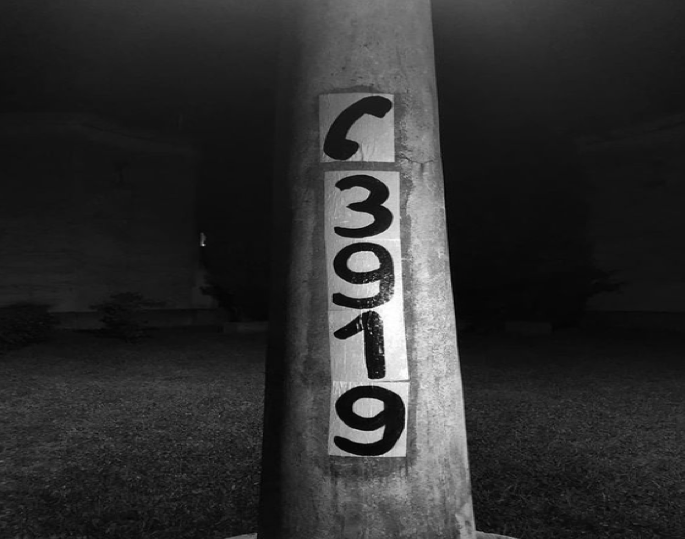
Here, the collective simultaneously addressed the impracticality of the area by adapting a shorter format rather than pasting large slogans, and grasped the opportunity for wider outreach to potential victims of domestic abuse. While this trend is not specific to France, complaints of domestic violence rose by 66 per cent during the second lockdown (French Government, 2021).
This logic was followed by other participants who placed collages in various focal points of urban life, such as at traffic lights and road junctions. At one busy road junction on the outskirts of Arras, Emma (2021) pointed out that this ordinary junction was actually a prized location; explaining, “traffic lights are slow here, so cars are forced to stop for a while, and have time to read”. Collages can thus convert city spaces into contested ground by creating a specific, and personal, relationship to place (Farinosi and Fortunati, 2018; Baldini, 2016).
The colleur·euses’ opportunistic use of the city as a canvas disrupts “the constructed sanctity of urban space” (McAuliffe, 2013, p. 521). Collages are prohibited under article 322-1 of the French penal code, which punishes the act of slight degradations to the built urban environment that results from “willful damage” with fines and community service. Although collages remain a grey area – sheets of paper can be removed without lasting damage, unlike graffiti – the colleur·euses nevertheless seek to avoid any interaction with the police. Collages are also often peeled off or defaced immediately by residents and the city councils, in accordance with the “broken window theory” (Wilson and Kelling, 1982), which stipulates that visible public phenomena, such as graffiti or collages, are symptomatic of “official failure” (Glazer, 1979; Denis and Pontille, 2011). Emma argued that residents were often “preoccupied by the damage caused by collages, saying that they agree with the message, but not the medium”, whilst Anna claimed that it is mostly a demonstration of NIMBYism. The vestiges of the destroyed collage often reveal the perpetrator: a perfectly stripped-off collage being the work of the city council, while residents often use whatever is at hand to make the collages unreadable.
The colleur·euses seek the best ways to maximise the longevity of the collage, to ensure that it will be seen and read by more people. This is often done by pasting high up on the wall, reclaiming a rarely used part of the urban environment. Kalel (2021) explained: “the higher the collage, and the more out of reach it is, the less likely it is to be affected by dampness or the rain, but also peeled off by people”. In this manner, the colleur·euses utilise the full potential of the street, often using urban furniture, such as bins, bus stops or benches, as well as the built environment, climbing walls, window frames or drainage pipes, to reach certain areas. Whilst walking in Marseille, Vania and I came across a short collage, “OSE” (Dare), pasted very high up on a wall. Pointing at the electric junction box below, Dania (2021) commented: “The most daring ones often climb on urban furniture to paste high up. The Dare collage is so powerful – in three letters, you liberate yourself, you go and do it”. In line with other urban practices, such as parkour (Garrett, 2006), or skateboarding, collages thus create a vernacular experience of the urban, enabling the colleur·euses to reclaim the built environment in its entirety. Alix (2021) describes how collages enable her to claim the city as her territory:
Collages are a way to say that we’re here, we exist, and we’re making ourselves heard. If they are ripped, it doesn’t matter, because we always come back and paste again. I mark my territory – like a cat who urinates.
— Alix (2021)
4.2 (Re)presenting space through feminist collage
Feminist collages are used to reclaim representations of space through symbolic experiences of the urban (Lefebvre, 1991). It will argue that collages are used to (re)claim places of power and create lieux de mémoire (realms of memory) (Nora, 1989), as well as to subvert the public-private binary that permeates through urban space.
4.2.1 Places of power
The city is used by the colleur·euses as a canvas to amplify their presence and messages, through the medium of collage, in places where power is exercised. Collages were also placed in symbolic locations that materially represented power in the city, whether this be institutional, political, legal, cultural, religious or economic (Cosgrove, 1989; Rose, 1993). The public context within which collages are placed is thus crucial: the meaning of the intervention is tied to where it is situated, as well as to the social and political circumstances.
Based on the conclusions of this research, the motivation to do so were twofold: to increase the reach and visibility of individual collages; and to express direct opposition to whatever the symbolic location is perceived to stand for. Highly critical of the French judicial system, participants often mentioned that pasting in the vicinity of places of judicial power, whether that be near local court buildings, or police headquarters, was highly tempting. The colleur·euses of Marseille each mentioned a recent collage session in support of Valérie Bacot, a French woman who was on trial for the murder of her abuser. The colleur·euses not only expressed their support but viewed the case as a reflection of patriarchal injustice and a consequence of the state’s failure to protect Bacot from abuse.
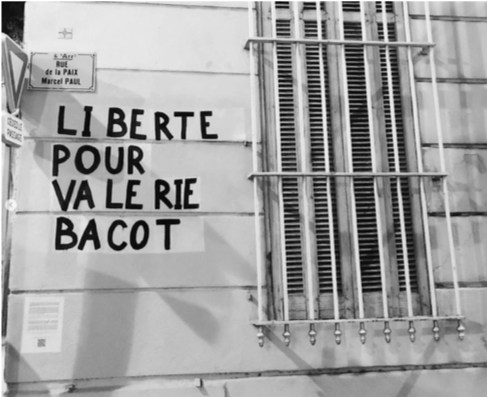
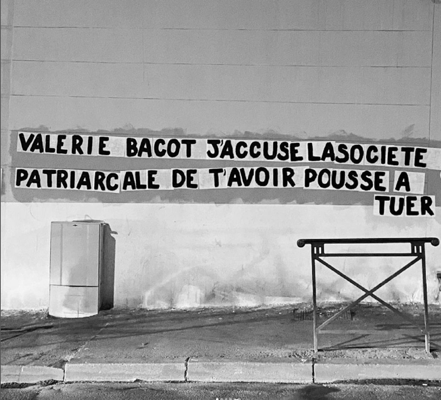
A couple of weeks later when walking in the city of Bordeaux, in the Gironde Department of France, I asked Ali if she had ever been arrested for pasting. She replied, “Yes, and right here”, pointing to the regional government (Prefecture) offices. She explained:
We learnt that the Prefect of Gironde had ordered the expulsion of a refugee squat with 90 children at four in the morning. We considered that it was totally unjust and pasted in front of the Prefecture in opposition to that decision. We were arrested, and spent the night in custody.
— Ali, Bordeaux (2021)
Ali’s situation is rare; the colleur·euses follow a strict protocol that is designed to prevent encountering incidents with the police, and they rarely get arrested. Yet, in this case, pasting near the Prefecture, the local symbol of government power, was seen as a direct opposition to the State. Fearful of the legal risks, most collectives thus refuse to paste on or around public buildings. Also excluded are churches, religious buildings and cemeteries, out of respect for freedom of religious expression. Yet, Camille (2021), who pastes in Amiens, stated that her collective “pastes on public buildings because we consider that our taxes should contribute towards gender equality and fighting gender-violence, so by attracting attention to the topic, we know that our taxes are going towards the clean-up”, referring to the systematic censure of their collages by the city council.
4.2.2 Lieux de mémoire: collages as practices of memorialisation
Nora defines a lieu de mémoire as “any significant entity, whether material or non-material in nature, which by (…) human will or (…) time has become a symbolic element of the memorial heritage of any community” (1984, p. 17). Translated as ‘sites’, ‘places’ or ‘realms’ of memory (Legg, 2004), memory is thus crystallized in certain sites and through actions that ‘stop time (…), immortalize death, or materialize the immaterial’ (Nora, 1989, p. 19). The colleur·euses use collages to create their own lieux de mémoire to commemorate victims of femicide, named ‘Femmage’. Femmage is a neologism based on the French words femme (woman) and hommage (memorial); the latter etymologically associated with homme (man).
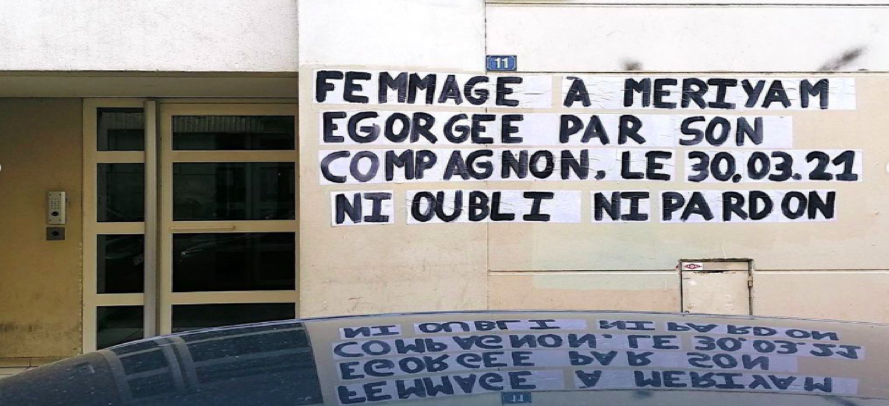
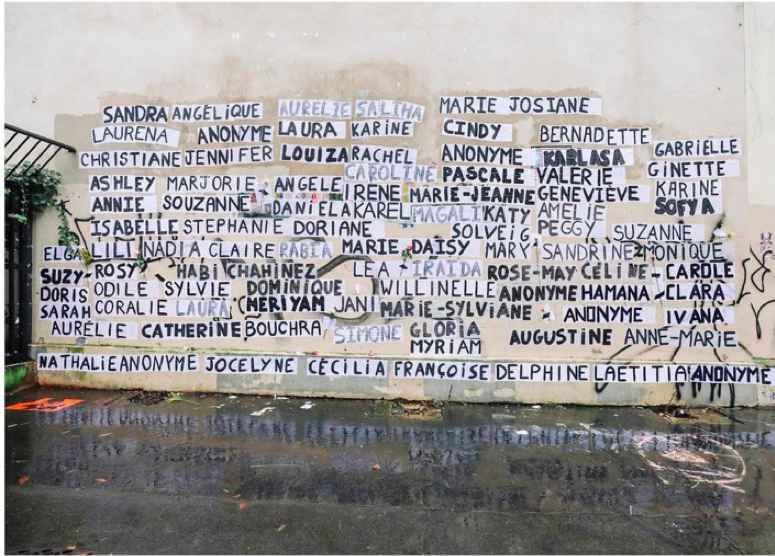
These specific collage sessions occur only with the informed consent of victims’ families, and feature the victim’s name, age and sometimes cause of death. In France in 2021, a woman died every three days as the result of a femicide attack (Nous Toutes, 2021). Femmages are thus a kind of remains; “the ultimate embodiments of a memorial consciousness” (Nora, 1989, p. 11), that artificially yet purposefully maintains the memory of the victim, and serves as a constant reminder that “behind the statistic, there is someone’s life” (Ade, 2021).
“Tak[ing] the space that nobody offered” (Hvala, 2008, p. 2), collages render commemoration an omnipresent and integral part of our daily lives, as everyday environments can become lieux de mémoire if the imagination imbues them with a symbolic aura (Nora, 1989). By appropriating familiar public spaces, femmages seek to open the public’s eyes to the systemic nature of femicide. Systemic violence is also highlighted through the production of large-scale memorials organized to honour the memory of all victims through the past year. Ali participated in the 2020 femmage organized by the colleur·euses of Bordeaux. During her interview, she took me to the location of the femmage, la Place des Quinconces, one of the biggest squares in the city of Bordeaux. As we stood below the Monument des Girondins, a large column surrounded by lavish fountains, Ali explained:
We were encouraged to do this by the families of the three victims of femicides in 2020 in the area. Very early one morning we pasted high-up, on the four sides of the statue, the names of the 100 victims of femicides. It took us months to organise, there were ten of us pasting, 20 to 30 on the lookout. It was very emotional, I think that we all cried.
— Ali, Bordeaux (2021)
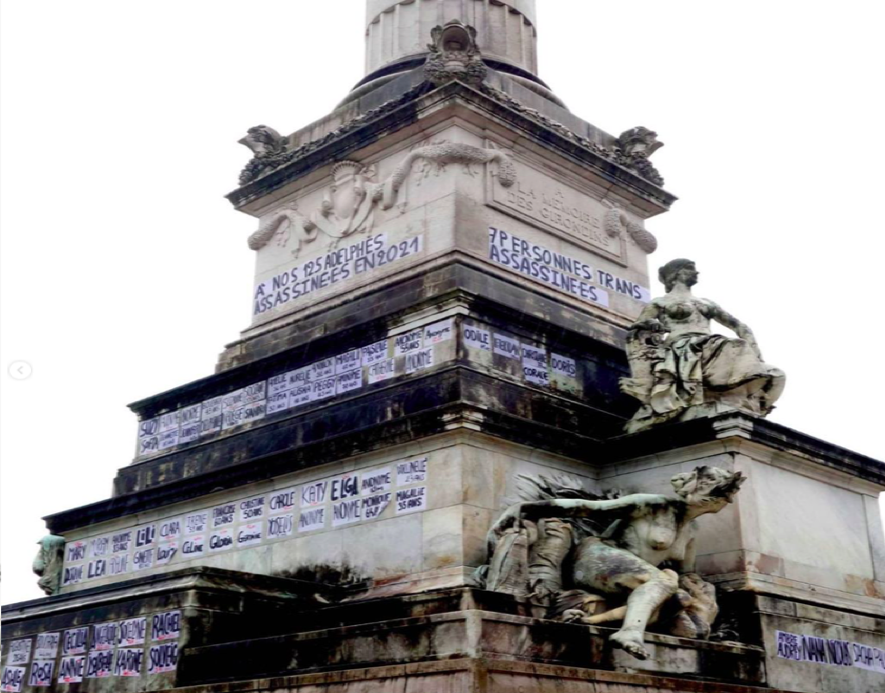
By displaying the names of the victims on one of the city’s landmarks, Ali and her collective use collages as a vector of commemoration and revindication simultaneously. They accord each victim the recognition that they deserve, while lambasting the failure of the French Government to protect women from endemic violence. Collective memory is typically institutionalized through enduring public means such as war memorials, commemoration plates, street names and statues. In contrast, femmage events, which place the victims of patriarchy at the centre of the commemoration process, remain ephemeral and precarious. Ali recounted emotionally what occurred in the days that followed:
Our femmage was destroyed in a couple of weeks by Action Française, a French royalist and extreme right group. They sent us pictures of themselves ripping our work and posing with their flags in front of our memorial. It broke our heart because we don’t understand how you could possibly be against femicides, but we will commemorate again next year.
— Ali, Bordeaux (2021)
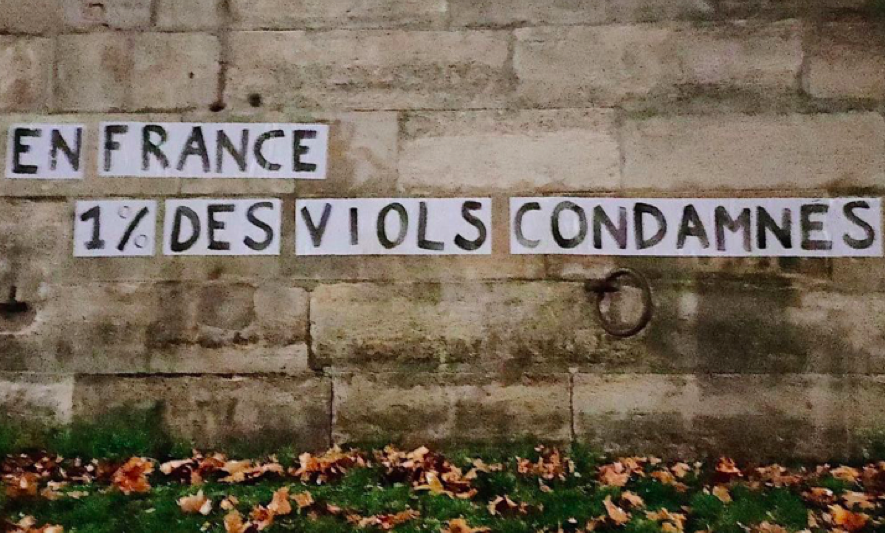
Ali’s feelings of incomprehension and disgust were echoed by other participants. When referring to the fate that befell one of her collective’s collages, “1 per cent of rapes are sentenced” (see figure 10), Tina explains: “I don’t understand why people do that, it’s just a statistic, the person must have felt targeted”.
Some participants have developed strategies to make the ripping down of collages more difficult. Dania detailed one of the methods she adopted when pasting in Marseille:
Sometimes when we paste, we take our keys or a cutter and we make slash marks on the collages, as if it was pre-cut. When you try ripping it off, it strips into pieces, so it’s harder to clean completely.
— Dania, Marseille (2021)
Dania and I came across many remnants of collages as we walked together along the streets of Marseille. As we attempted to decipher what once was pasted there, Dania touched the wall, full of emotion: “I’m emotional when I see bits of collages, almost like scars”. In this sense, collage remnants materially, textually, and viscerally reflect the “carpet of ongoing maintenance and repair” of the city (Graham and Thrift, 2007, p. 3), regardless of whether it is the work of the city maintenance staff or of local residents and passers-by.
4.2.3 Challenging public-private binaries sustained by the urban
Collages challenge the public-private binary (Sheller and Urry, 2003); this research finds that the colleur·euses continuously negotiate the grey space between the two (McDowell, 1999). Many participants spoke of making the “private political” (Jones, 2008, p. 205), by rendering publicly visible that which is often left in the “private sphere”. For Camille, making the private public was “getting naked without getting a chill”. She detailed: “it’s speaking about a violent topic through rapid and effective means to make certain issues known to all, it’s breaking silences and secrets”.
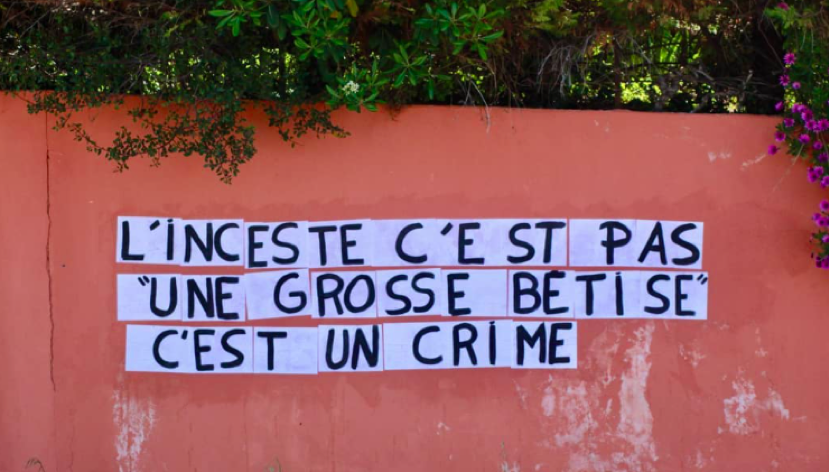
Child-sex abuse and incest has been at the centre of French political debate since the publication of two testimonies of child sex abuse, Le Consentement, by Springora (2020), and la Familia Grande, by Kouchner (2021), which broke the code of silence on incest. Zoé spoke of the role of collages in increasing public awareness. She argued that by bringing historically ‘private’ issues – such as rape, child-sex abuse, incest, or violence – to the public sphere, collages have “helped to make what was deemed to be anecdotal or intimate a public concern”. Yet, issues of child-sex abuse and incest in France are far from anecdotal; the French polling organization Ipsos (2021) claims that one person in ten in France is a victim of incest. This statistic is often used by the colleur·euses. Vania mentioned that her collective often pasted the statistic in the vicinity of primary schools to raise awareness. She describes the reach of such a message: “Some slogans are hard – because the topics are tough, such as incest. But it’s so important, and the children can ask their parents questions, who will be able to explain”. Given the nature of the topic, she explained that the collective ensures that slogans are neither shocking nor evasive, in the hopes of fostering conversations: “I like to paste ‘Dad – rape is forbidden’, written in cursive letters. The sentence is strong, I hope that it acts as food for thought next to a school because children walk in the street too”. Here, by adapting the message to children in both shape and form, through the use of cursive writing, and age-appropriate words, Vania and her crew bring taboo topics to the street, challenging the status quo, and offering a cause for reflection (Clarke, 2016).
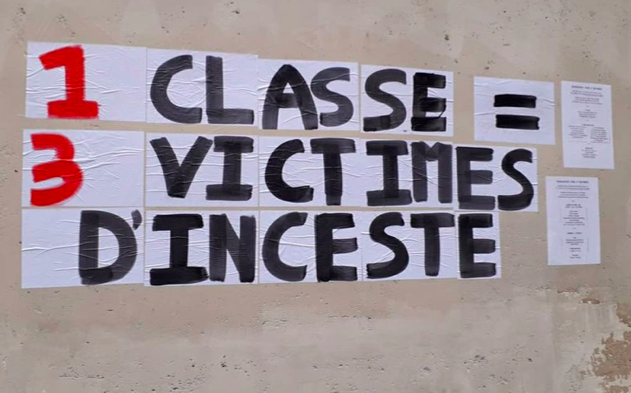
Pleasure and danger appeared as another patriarchal binary that was perpetually negotiated through collages. Fear produces a “sense of space as something to be tricky, something to be negotiated, a hazardous arena” (Rose, 1993, p. 146). Pleasure was derived from “flirting with illegality”, as many participants spoke of collage sessions filled with “excitement and adrenaline” that left many feeling “badass”, like “the queen of the world”. Anna (2021) was brutally honest about the tension permeating the practice, stating: “I like the fact that it’s illegal, I like to defy the rules, it feels good”. Camille stated that “it is pleasurable, as women, to disobey by putting up ideas that we consider to be important”. She continued: “the more we are, the stronger, when we’re together we’re afraid of nothing, we’re like wonder women”. For Camille, the pleasure in pasting comes from feeling united with other members of the collective and belonging to a group on which she can rely. As Gauntlett (2011, p. 2) writes: “making is connecting (…) and acts of creativity usually involve, at some point, a social dimension that connects us with other people”. In this sense, sharing the experience of collective creation thus fosters social and emotional engagement between the colleur·euses.
Geoghagen (2013) stipulates that enthusiasm produces a sense of self and feelings of belonging, while also holding the potential to disrupt and reorganize social relations in space. Questioned on the topic of pleasure and danger, Kati explains: “I find it galvanizing, empowering, to be in a group without a cisgender man (…) to defend us. It allows us to feel much more comfortable in the street during the day”. This sense of increased spatial confidence thus translates into manifestations of power, as the colleur·euses “write themselves onto the street” (Koskela, 1997).
4.3 Reappropriating “lived experiences”: collages as a way to reclaim the corporeal experience of the urban
This section aims to explore the ways in which feminist collages are used to reclaim corporal and lived urban experiences. It firstly argues that collages create a new “sense of space” (Leach, 2002, p. 284), by demystifying the urban, before showing how collages enable participants to negotiate the space of public transport and the urban night differently. The analysis will conclude with an exploration of inclusivity within the practice itself.
4.3.1 A “new sense of space”: feminist collages and the “demystification” of the urban
By challenging the norms of presentation and the framing of urban space (Pinder, 2005), collages both reaffirm the urban as a “sensuous realm” that is lived (p. 385) and create a new “sense of space” (Leach, 2002, p. 284). Kati explains how collages have contributed to making her feel more at ease in the street:
I feel a little bit better in the street – it’s not just collages, but also my reading, my feminism, protests – it’s another way of ‘taking the street’. Now, I realise that when I walk in the street, I’m always the one who’s shifting in the street, so I try to walk straight.
— Kati (2021)
Here, Kati’s refusal to shift in the street is “an expression of boldness” (Koskela, 1997), using everyday walking as a way to “not only passively experience space but actively take part in producing it” (p. 316). By conferring increased boldness and confidence, collage-pasting activism also contributes to the “de-mystifying” of the urban (Koskela, 1997, p. 308). Hortense explained that even though she had “always felt very Parisian”, collages had permitted her “to make sense of the city in a different way and get to know Paris much better”. She cited “learning the names of the city streets through walking for hours on end”, as a practice that allowed her to appropriate the city as “hers”. Accumulated knowledge and memory, acquired through everyday experiences and use of public space, such as walking, thus enable the colleur·euses to increase their sentiment of belonging and attachment to their city (de Certeau, 1984).
Jo, who happened to sit on the City Council of her town in the South-East of Paris, utilised this knowledge acquired through collage-pasting to inform her political decision-making.
My town is very large, so there are a lot of neighbourhoods that I’m not used to going to outside my own, so collages allowed me to come to terms with the reality in other areas, especially in big blocks of flats. As an elected representative, I have used this knowledge to promote the idea that certain places in the town are not safe or accessible for women. One suggestion that I made was to build more playgrounds, to enable women, who tend to look after children, to have a space that they can claim. In my town, there are a lot of benches, and on benches, it’s often men who sit and linger.
— Jo (2021)
4.3.2 Reappropriating everyday experiences: public transport and the urban night
Public transport appeared to be a site of perpetual negotiation and contestation for many participants. Lili spoke of exerting “her right to exist in that space”. She explains: “I spend a lot of time on public transport. I noticed that I often have music on, that I look down and walk fast. Now I try not to do that systematically either, to observe my environment, to reclaim that time as well and tell myself that I have the right to exist in that space”. Alice extends the concept to the right to “take up space”. She describes how her commute in the Paris underground has changed since she started to paste:
In the underground, I now take up space, I actually take all of the space that I want whereas beforehand, I would have made myself very small.
— Alice, Paris (2021)
Alice even argued that pasting had given her the means and the resources to intervene in that space. She referred to a specific incident that had happened to her recently: “I even confront men when I see manspreading – Sir, don’t you see that this girl has no space?”. Hélène also mentioned a similar situation on the RER Paris regional train network: “I saw that a girl was being circled by guys, and I intervened, I made sure that they went away”. She commented that even though she was alone at the time, “she felt supported by the group”, before stating that “the group gives me strength, I’m never alone”.
Participants often described their relationship to the hours of darkness as ambivalent, a time that allowed the colleur·euses to be “hidden from everyone” (Kati, 2021) and to take over the city, despite everything that “darkness implies, especially for girls”. McDowell (1993) argues that women’s ease in occupying space varies during the day. From this research, night-time appeared to be a time where women and gender minorities were less accustomed to taking up space. Many participants described the very act of being outside at night-time, with other women and gender minorities, as empowering in itself. Kati stated that “collages gave her the opportunity to reclaim the urban space at night”, when she would usually endeavour to “go home quickly, and not hang around”. Lili explained that “it feels good to be in a space that tends to be forbidden to you, if you’re a cis or trans woman, especially at night-time”. Participants often showcased a heightened awareness of their urban environment at night-time (Valentine, 1989). When asked to reflect upon her mobility at night-time, Leta began by stating that “I don’t restrict myself much, if I want to go somewhere, I go”, before going back on her words: “Actually, now that I think about it, I change pavement at night if there’s a man behind me; but I don’t change my behaviour too much, I don’t necessarily take taxis, maybe that’s because I was spared”. Here, Leta mentions one “coping mechanism” (Riger and Gordon, 1981) that she puts in place to feel safer at night-time.
When asked about her mobility at night-time with the group, Leta’s tone radically changes:
Oh, when we’re together with the girls, I don’t think about changing lane or pavement if there’s a guy approaching, it’s hard to see him. I realize that on my own I wouldn’t go into alleys that I go to hang out with the girls.
— Leta (2021)
The collective thus appears to confer an increased sense of security. Pushed to reflect on the ways in which pasting changed their relationship to the urban night, many respondents mentioned that it conferred on them a “feeling of legitimacy” and “confidence”. Ali said:
I’m a woman so it’s complicated to walk with ease at night-time. When I joined the group, I didn’t feel safe, even dressed all in black, but with the collective, I know why I’m here, and that I’m with ‘safe’ people.
— Ali, Bordeaux (2021)
This sentiment was thus primarily attributed to the power of the collective itself. This was seconded by Alice who admitted that she “felt more legitimate in the evening to be there, when we’re in a group, with our buckets”, but not on her own.
4.3.3 “More than sheets of paper”
“I joined the movement because it was accessible”, replied Alex to my question about how she came to join the colleur·euses. She explained: “You don’t need to have studied for ten years, or been a feminist for five to paste, it’s simple and accessible in terms of means – paint and paper – and ways of doing”.
Yet, it became clear from my research that feminist collages were inherently exclusive. Like many craft practices, feminist collages require particular luxuries of time, space, and capital (Adams and Hardman, 2013). Manon explained that a single collage is prepared over several days: “you have to choose the slogan, then paint, then wait for the paint to dry, and then finally paste”. She also reaffirmed that collages are also means-exclusive, as some people “can’t afford to buy paper, acrylic paint”, or don’t have sufficient space to dry the sheets. She concluded:
Not everyone can paste for many reasons – not having a car, not being able-bodied, people who don’t have paper, can’t afford to get fined, it’s not just sheets of paper.
— Manon (2021)
Accessibility was often stressed as a limiting factor. Night-shifts are known to be psychologically, biologically and socially challenging (Wagstaff and Lie, 2011), and participants often stressed the physical exhaustion that came with walking for many hours at night, carrying heavy buckets of glue, brushes and paper. Charlotte stated that she felt limited in traditional pasting sessions: “I walked with crutches and with a cane for two years, I can’t run anymore and have chronic pain that is heightened with stress”. When the 2020 lockdown made it impossible to paste, she began during her walks to place collages on panneaux d’affichage libre (designated public display boards) that usually comprise local advertisements, or posters for lost cats. She explains that this was a way for her “to paste without being in pain afterwards”. When the lockdown ended, Charlotte and her collective continued this practice, driving all around the area to paste on public display boards across the Val d’Oise, on the North-West of Paris. She explains why:
We can paste in broad daylight, the police can’t say anything, and we can be more inclusive: people with children, with disabilities… Not pasting on walls also protects us from fines – it means those who couldn’t paste because of financial reasons, or their job, or time, can.
— Charlotte (2021)
Intersectionality highlights the complex nature of gendered experiences with regard to race, ethnicity, class, age or sexuality (Crenshaw, 1991). From this research, it was clear that while the colleur·euses are broadly intersectional feminists, despite variations in degree between collectives, there was often a lack of racial diversity within the collectives themselves. Participants interrogated the racial power dynamics that permeate the practice of collage, with Jenna reflecting:
It’s not very surprising, when you think about who feels legitimate to reclaim public space, and who can actually take the risk to do so. We know that when you’re not white, you don’t perceive risk and the police in the same way, and you tend to be more afraid of them.
— Jenna (2021)
This sentiment was corroborated by Julie, who admitted that “it’s really easy for us, as white women, to protest, as we’re not victims of police brutality, and we don’t put ourselves in any danger by doing so”. Extending this idea, Lili argued that collages were a form of racial and social domination:
I think about the people who work for the city council, and spend their time cleaning up after us. It mustn’t be easy for them, in fact it’s actually social domination – as it’s often people of colour who work in the maintenance of urban spaces. We just give them more, pointless, work.
— Lili (2021)
Participants were often reflective concerning questions of representation and legitimacy, especially with regard to writing and pasting collages. Kati recognized that her collective “didn’t feel legitimate to write collages on racial issues because they were mostly white”. Emi stressed that, weary of acting like a “white defender of the rights of the universe”, she avoided all topics that seemed too “remote” from her own positioning, as white middle-class, citing the situation of Afghani women’s rights as a topical example for which she felt uncomfortable about pasting. Recognizing her privilege, Kati argued that her collective “often made themselves spokespeople for those who take more risk than white, cisgender, able-bodied people; or those who have the time, the energy, the physical ability and the possibility of being arrested”. This idea was seconded by Myriam: “We must do this because the people concerned are sometimes exhausted by political activism, so we must support them and help to raise awareness”. She concluded by saying that “it was out of question to do nothing at all”, stating that the question was more around “helping out in ways that are fair”. Participants often highlighted the emotional labour that came with the practice. Lol explains:
The reality that we confront the world to – we’re the first ones to see it – we know the numbers, the names of the women who died this year, their stories. There is this constant mourning that reminds us why we do this, but it’s tiring to see that things change so little, it’s perhaps not physical violence, but intellectually it is.
— Lol (2021)
Conclusion
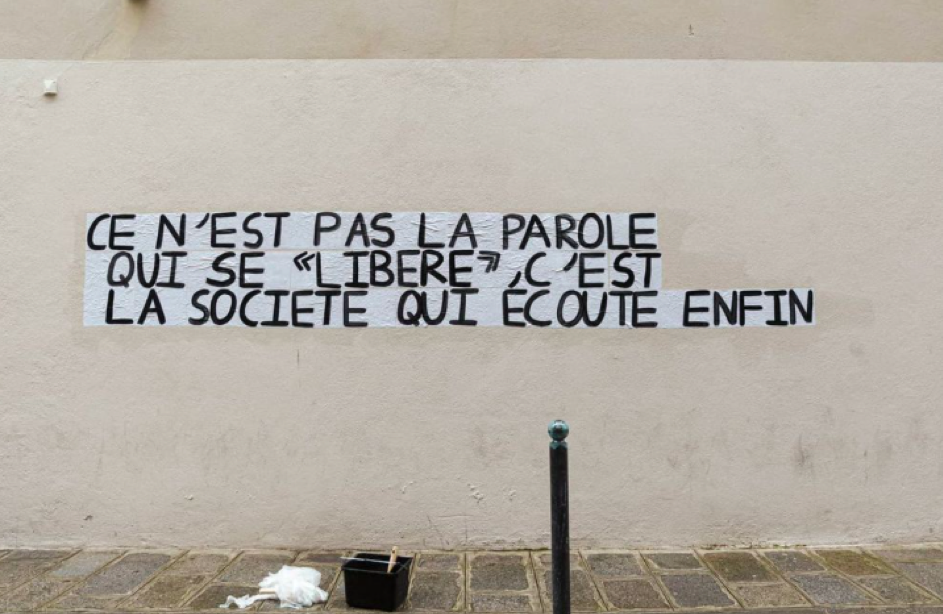
As this research has shown using mobile methods, feminist collages are used by the colleur·euses to reclaim the urban in a French context on three separate levels: spatial practices, representations of space and spaces of representation (Lefebvre, 1991). The colleur·euses must constantly and often creatively negotiate the restrictions imposed by the built environment by occupying the streets and taking up space to develop a vernacular experience of the urban. Reclaiming the built environment allows them to reclaim representations of space, enabling them to subvert everyday use of places of power, create lieux de mémoire (Nora, 1984) through new practices of memorialisation, as well as challenge patriarchal binaries. Finally, this dissertation argued that collages were used to reclaim lived experiences of urban space in France. By challenging the norms of presentation and the framing of urban space (Pinder, 2005), collages both reaffirm the urban as a “sensuous realm” that is lived (p. 385) and create a new “sense of space” (Leach, 2002, p. 284). Public transport and the urban night thus appeared to be sites of perpetual negotiation and contestation for many participants. Yet, collages remain inherently exclusive, although the colleur·euses collectives endeavour to increase the accessibility of the practice itself.
In retrospect, more could have been done, had I been able to recruit more participants within a single collective, or conduct in-depth ethnography to explore differentiated experiences of the urban within a single location. This dissertation focuses on urban experiences of collages in Paris and its outskirts, as well as in 8 cities in France, but does not claim to represent all colleur·euses in France. This study fails to account for the diversity of collages practices within France itself, whether it be the use of collages in rural areas, or in French overseas territories. There is scope to use ideas from this research and apply them to collectives across various geographies, in cities and countries beyond France. Most importantly, as the practice is exported rapidly across borders through the use of social media, it would be interesting to study collages in the Global South.
Whilst I strove to follow an intersectional approach throughout, I acknowledge that my failure to include more transgender experiences has implicitly centered this dissertation around reclaiming the urban experience of cisgender woman. I also recognize that these findings are ultimately imbued with my own positionality as a white, cis-gender, heterosexual and able-bodied woman. Whilst “go-along” interviews enabled me to gain an embodied understanding of the practice (Nash, 2010; Simonsen, 2013; Duedahl and Blichfeldt, 2020), conducting ethnography and participant-observation by accompanying participants during collage sessions would have permitted me to better explore the importance of different subjectivities in producing varied experiences of urban space.
References
Adams, D, S, A J & Hardman, M, (2013). Guerrilla warfare in the planning system: revolutionary progress towards sustainability? Geografiska annaler. Series B, Human geography, 95(4), pp. 375–387.
Anderson, J. (2004). Talking whilst walking: a geographical archaeology of knowledge. Area (London 1969), 36(3), pp. 254–261.
Attoh, K. (2011). “What Kind of Right is the Right to the City?” Progress in Human Geography 35, pp. 669–685.
Banks, M. (1995). Television and Anthropology: An Unhappy Marriage? Visual anthropology (Journal), 7(1), p. 21.
Baldini, A. (2016). Street art: A reply to Riggle. Journal of Aesthetics and Art Criticism, 74(2), 187–191.
Baldini, A., & Pietrucci, P. (2017). Knitting a community back together: Post-disaster public art as citizenship engagement. In L. Iannelli & P. Musaro` (Eds.), Performative citizenship. Public art, urban design, and political participation (pp. 115–131). Milan, Italy: Mimesis International.
Bard, C. (2020). Féminismes 150 ans d’idées reçues, Le Cavalier Bleu.
Benwell, MC. (2009) Challenging Minority World Privilege: Children’s Outdoor Mobilities in Post-apartheid South Africa. Mobilities, 4(1), pp. 77–101.
Biswas, Ritwika. (2019). Reclaiming the Urban: An Intersectional Analysis of Women’s and Men’s Experiences of Public Spaces in Kolkata, India.
Black, S. (2017). KNIT + RESIST: placing the Pussyhat Project in the context of craft activism. Gender, Place & Culture, 24(5), 696–710.
Bondi, L. & Rose, D. (2003). Constructing gender, constructing the urban: A review of Anglo-American feminist urban geography. Gender, place and culture: a journal of feminist geography, 10(3), pp. 229–245.
Bondi, L. (1992). Gender symbols and urban landscapes. Progress in human geography, 16(2), pp. 157–170.
Bondi, L. & Domosh, M (1998) On the Contours of Public Space: A Tale of Three Women. Antipode, 30(3), pp. 270–289.
Bourdieu, P. (2018). Social Space and the Genesis of Appropriated Physical Space. International journal of urban and regional research, 42(1), pp. 106–114.
Browne, Kath, 2007. A party with politics? (Re)making LGBTQ Pride spaces in Dublin and Brighton. Social & cultural geography, 8(1), pp. 63–87.
Butler, J. (2011). “Bodies in Alliance and the Politics of the Street”.
Butler, M. and Derrett, S. (2014). The walking interview: An ethnographic approach to understanding disability. The Internet Journal of Allied Health Sciences and Practice, 12(3).
Carpiano, R. M. (2009). Come take a walk with me: The “Go-Along” interview as a novel method for studying the implications of place for health and well-being. Health & place, 15(1), pp. 263–272.
Casey, E. (2001). Between geography and philosophy: what does it mean to be in the place-world? Annals of the Association of American Geographers 91, pp. 683–93.
Certeau, M. de. (1984). The practice of everyday life, Berkeley; London: University of California Press.
Clark, A. and Emmel, N. (2009). The methods used in connected lives: Investigating networks, neighbourhoods and communities. ESRC National Centre for Research Methods, NCRM Working Paper Series, 06/09.
Clarke, K. (2016). Willful knitting? Contemporary Australian craftivism and feminist histories. Continuum: Journal of Media & Cultural Studies, 30(3), pp. 298–306.
Cloke, P., Cook, I., Crang, P., Goodwin, M., Painter, J. and Philo, P. (2004) Practising Human Geography. London: Sage.
Collages Féminicides Paris (2021). Notre colère sur vos murs, Éditions Denoël.
Cosgrove, D., 1989. Geography is everywhere: culture and symbolism in human landscapes. In Horizons in human geography (pp. 118–135). Palgrave, London.
Crenshaw, K. (1991). Mapping the Margins: Intersectionality, Identity Politics, and Violence against Women of Color. Stanford law review, 43(6), pp. 1241–1299.
Deem, R. (1986) All Work and no Play? The Sociology of Women and Leisure. Milton Keynes: Open University Press.
Denis, J., & Pontille, D. (2021). Maintenance epistemology and public order: Removing graffiti in Paris. Social Studies of Science, 51(2), 233–258.
Doan, Petra L, 2010. The tyranny of gendered spaces – reflections from beyond the gender dichotomy. Gender, place and culture: a journal of feminist geography, 17(5), pp. 635–654.
Duedahl, E. & Stilling Blichfeldt, B. (2020). To walk the talk of go-along methods: navigating the unknown terrains of being-along. Scandinavian journal of hospitality and tourism, 20(5), pp. 438–458.
Dworkin, A. (1993). Letters from a war Zone. New York: Lawrence Hill Books.
Elkin, L. (2021) Notes on a Parisian commute, Les Fugitives.
Elwood, S. A & Martin, D.G. (2000) “Placing” Interviews: Location and Scales of Power in Qualitative Research. The Professional geographer, 52(4), pp. 649–657.
Edensor, T. (2015). The gloomy city: Rethinking the relationship between light and dark. Urban Studies, 52, pp. 422–438.
Evans, J. and P. Jones. (2011). “The Walking Interview: Methodology, Mobility and Place.” Applied Geography 31(2): pp. 849–858.
Farinosi, M. & Fortunati, L. (2018). Knitting Feminist Politics: Exploring a Yarn-Bombing Performance in a Postdisaster City. Journal of Communication Inquiry, 42(2), 138–165.
Fenster, T. (2005). The Right to the Gendered City: Different Formations of Belonging in Everyday Life. Journal of gender studies, 14(3), pp. 217–231.
Foucault, M. (1982) The Subject and Power. Critical inquiry, 8(4), pp. 777–795.
Garcia, C. M., M. E. Eisenberg, E. A. Frerich, K. E. Lechner, and K. Lust. (2012). Conducting go-along interviews to understand context and promote health. Qualitative Health Research 22: pp. 1395–403.
Gardner, C.B. (1995): Passing by. Gender and Public Harassment. Berkeley: University of California Press.
Garrett, B. L. (2010). Urban Explorers: Quests for Myth, Mystery and Meaning. Geography compass, 4(10), pp. 1448–1461.
Gibson K. (2005) ‘11,000 vacant lots, why take our garden plots?’ Community garden preservation strategies in New York City’s gentrified Lower East Side. In: Wastl-Walter D, Staeheli L, and Dowler L (eds) Rights to the City. International Geographical Union. Rome: Societa` Geografica Italiana, pp. 353–369.
Graeber, D. (2009). Direct action: An ethnography. AK press.
Graham, S. (2005) ‘Switching cities off: urban infrastructure and US air power’, City 9(2), pp. 169–194.
Graham, S. and Thrift, N. (2007). Out of order – understanding repair and maintenance. Theory, Culture and Society 24(1), pp. 1–25.
Gauntlett, D. (2011). Making is connecting: the social meaning of creativity from DIY and knitting to YouTube and Web 2.0. London: Polity Press.
Geoghagen, H. (2013). Emotional geographies of enthusiasm: belonging to the telecommunications heritage group. Area Early View. 45(1), pp. 40–46.
Green, E., S. Hebron and D. Woodward. (1990) Women’s Leisure, What Leisure? Hampshire: Macmillan.
Greer, B. (2014) Craftivism: The Art of Craft and Activism. Vancouver: Arsenal Pulp Press.
Hall, T., Lashua, B., and Coffey, A. (2006). Stories as sorties. Qualitative Researcher, 3(Summer), 2–4.
Haraway, D. J. (1991). Simians, cyborgs, and women: the reinvention of nature, London.
Harvey, David. (2003). The right to the city. International journal of urban and regional research, 27(4), pp. 939–941.
Harvey, D. (2003) Paris, capital of modernity, New York: Routledge.
Hubbard, P & Colosi, R. (2015). Taking back the night? Gender and the contestation of sexual entertainment in England and Wales. Urban Studies, 52, pp. 589–605.
Hesse-Biber, S. (2014). Feminist Approaches to In-Depth Interviewing. In S. Hesse-Biber (Ed.), Feminist Research Practice: A Primer (Second Edition) (pp. 182–232). SAGE Publications, Inc.
Holton, M. & Riley, M. (2014). Talking on the move: place-based interviewing with undergraduate students. Area (London 1969), 46(1), pp. 59–65.
Hou, J. (ed.) (2010) Insurgent public space: guerrilla urbanism and the remaking of contemporary cities. Routledge, London and New York.
Hvala, T. (2008). Streetwise Feminism – Feminist and Lesbian Street Actions, Street Art and Graffiti in Ljubljana. Amnis, (8).
Iphofen, R. & Tolich. (2018). Walking Interviews Ethics. The SAGE Handbook of Qualitative Research Ethics, London: SAGE Publications, pp. 174–187.
Iveson, K. (2010) The Wars on Graffiti and the New Military Urbanism. City 14(1–2), pp. 115–134.
Iveson, K. (2013). Cities within the City: Do-It-Yourself Urbanism and the Right to the City. International journal of urban and regional research, 37(3), pp. 941–956.
Jones, S.H., 2008. Making the personal political. Collecting and interpreting qualitative materials, 3(205).
Kern, L. (2020). Feminist city: claiming space in a man-made world, Brooklyn.
Kouchner, C. (2021). La familia grande, Paris XIXe.
Koskela, H. (1997) ‘“Bold Walk and Breakings”: Women’s Spatial Confidence versus Fear of Violence’, Gender, Place and Culture 4(3): pp. 301–19.
Koskela, H. (1999) ‘“Gendered Exclusions”: Women’s Fear of Violence and changing Relations to Space’, Geografiska Annaler: Series B, Human Geography 81(2): pp. 111–24.
Kusenbach, M. (2003). Street phenomenology – the go-along as ethnographic research tool. Ethnography 4, pp. 455–85.
Laws, G. (1994). Oppression, knowledge and the built environment. Political Geography 13, pp. 7–32.
Leach, N. (2002) Belonging: towards a theory of identification with space, in: J. Hillier & E. Rooksby (Eds) Habitus: A Sense of Place, pp. 281–298. Aldershot: Ashgate.
Lefebvre, H. (1991). The production of space, Oxford.
Legg, S. (2005). Contesting and Surviving Memory: Space, Nation, and Nostalgia in Les Lieux de Mémoire. Environment and planning. D, Society & space, 23(4), pp. 481–504.
Lenette, C. & Gardner, J. (2021). Short Take: Walking Interviews with Refugee-background Women. Field methods, 33(3), pp. 305–312.
Mackay, F. (2014). Mapping the Routes: An exploration of charges of racism made against the 1970s UK Reclaim the Night marches. Women’s studies international forum, 44(1), pp. 46–54.
Macfarlane, R. (2008) The wild places, London: Granta.
Madge, C. (1997). PUBLIC PARKS AND THE GEOGRAPHY OF FEAR. Tijdschrift voor economische en sociale geografie, 88(3), pp. 237–250.
Masood, A. (2018). Negotiating mobility in gendered spaces: case of Pakistani women doctors. Gender, place and culture: a journal of feminist geography, 25(2), pp. 188–206.
Massey, D, (1993) Questions of Locality. Geography, 78(2), pp. 142–149.
Mayer, M. (2009). Right to the city in the context of shifting mottos of urban social movements. City, 13(2), 361–374.
McAuliffe, C. (2013). Legal Walls and Professional Paths: The Mobilities of Graffiti Writers in Sydney. Urban Studies, 50(3), pp. 518–537.
McDowell, L. (2018). Interviewing: Fear and Liking in the Field. In The SAGE Handbook of Qualitative Geography. London: SAGE Publications, pp. 156–170.
McDowell, L. (1999). Gender, identity and place: understanding feminist geographies, Cambridge: Polity.
McDowell, L. (1993). Space, place and gender relations: Part I. Feminist empiricism and the geography of social relations. Progress in human geography, 17(2), pp. 157–179.
McKittrick, K. (2006). Demonic grounds: Black women and the cartographies of struggle, Minneapolis: University of Minnesota Press.
Melbin, M. (1987). Night as Frontier: Colonizing the world after dark. New York: The Free Press.
Merleau-Ponty, M. (1962). Phenomenology of perception, New York.
Miller, B. & Nicholls, W. (2013) Social Movements in Urban Society: The City as A Space of Politicization. Urban geography, 34(4), pp. 452–473.
Mitchell, D. (2003) The Right to the City. New York, NY: Guilford Press.
Morris, N.J. (2011) Night walking: Darkness and sensory perception in a night-time landscape installation. Cultural Geographies, 18, pp. 315–342.
Monnier-Reyna, Madalena, 2021. Feminist Graffiti, Public Space, and the Pandemic: Understanding How the Les Colleuses Movement Challenges Space on the Streets of Paris and Online.
Myzelev A. (2015). Creating Digital Materiality: Third-Wave Feminism, Public Art, and Yarn Bombing. Material Culture, 47(1), pp. 58–78.
Nash, C.J., 2010. Trans geographies, embodiment and experience. Gender, Place & Culture, 17(5), pp. 579–595.
Nora, P. et al. (1984). Les Lieux de mémoire, Paris: Gallimard.
Nora, Pierre. (1989). Between Memory and History: Les Lieux de Mémoire. Representations (Berkeley, Calif.), 26(26), pp. 7–24.
Nous Toutes (2021). Décompte des féminicides.
Oakley, A. (1979) Becoming a mother. Oxford: Robertson.
O’Neill, M. (2018). Walking, well-being and community: Racialized mothers building cultural citizenship using participatory arts and participatory action research. Ethnic and Racial Studies 41: 73–97.
Pabón, J. (2013). “Be About It: Graffiteras Performing Feminist Community.” TDR/The Drama Review 57(3): pp. 88–116.
Pabón, J. (2016). “Ways of Being Seen: Gender and the Writing on the Wall.” In Routledge Handbook of Graffiti and Street Art, edited by Jeffrey Ross, 78–91. New York and London: Routledge.
Pain, R. H. (1997). Social geographies of women’s fear of crime. Transactions – Institute of British Geographers (1965), 22(2), pp. 231–244.
Pain, R. (2001) Gender, Race, Age and Fear in the City. Urban studies (Edinburgh, Scotland), 38(5/6), pp. 899–913.
Parent, L. (2016). The wheeling interview: mobile methods and disability. Mobilities, 11(4), pp. 521–532.
Parsons, D. L. (2000) Streetwalking the Metropolis: Women, the City and Modernity. Oxford: Oxford University Press.
Pinder, D. (2005). Arts of urban exploration. Cultural Geographies 19(4), pp. 383–411.
Price, L. (2015). “Knitting and the City.” Geography Compass 9, pp. 81–95.
Purcell, M. (2003). Citizenship and the right to the global city: reimagining the capitalist world order. International journal of urban and regional research, 27(3), pp. 564–590.
Reed, T. V. (2005). The art of protest: Culture and activism from the civil rights movement to the streets of seattle. Minneapolis: University of Minnesota Press.
Rich, A. (1994). Blood, bread and poetry: selected prose 1979–1985.
Riggle, N. (2010). Street Art: The Transfiguration of the Commonplaces. The Journal of aesthetics and art criticism, 68(3), pp. 243–257.
Riley, M. (2010). Emplacing the research encounter: exploring farm life histories. Qualitative Inquiry 16; pp. 651–62.
Rose, G. (2016). Visual methodologies: an introduction to researching with visual materials [4th ed.], London: SAGE.
Rose, G. (1993). Feminism and Geography. The Limits of Geographical Knowledge. Minneapolis: University of Minnesota Press.
Sharpe, W. C. (2008) New York Nocturne: The City after Dark in Literature, Painting and Photography, 1850–1950. Princeton, NJ: Princeton University Press.
Shaw, R. (2015). Controlling darkness: Self, dark and the domestic night. Cultural Geographies, 22, pp. 585–600.
Shaw, R. (2017). Pushed to the margins of the city: The urban night as a timespace of protest at Nuit Debout, Paris. Political Geography, Volume 59, pp. 117–125.
Sheller, M. & Urry, J. (2003). Mobile Transformations of ‘Public’ and ‘Private’ Life. Theory, culture & society, 20(3), pp. 107–125.
Shultziner, D. & Kornblit, I. S, (2020) French Yellow Vests (Gilets Jaunes): Similarities and Differences With Occupy Movements. Sociological forum (Randolph, N.J.), 35(2), pp. 535–542.
Simonsen, K., 2013. In quest of a new humanism: Embodiment, experience and phenomenology as critical geography. Progress in Human Geography, 37(1), pp. 10–26.
Smith, S.J. (1987): Fear of crime: beyond a geography of deviance. Progress in Human Geography, 11: 1–23.
Soja, E. W. (1980). “The Socio-spatial Dialectic.” Annals of the Association of American Geographers 70(2): pp. 207–225.
Solnit, R. (2001). Wanderlust: A history of walking. London: Verso.
Springgay, S. (2010). Knitting as an Aesthetic of Civic Engagement: Re-conceptualizing Feminist Pedagogy through Touch. Feminist teacher, 20(2), pp. 111–123.
Springora, V. (2020). Le consentement, Paris.
Sweetman, P. (2009). Revealing habitus, illuminating practice: Bourdieu, photography and visual methods. The Sociological review (Keele), 57(3), pp. 491–511.
United Nations (2012). Vienna Declaration on Femicide.
Valentine, G. (1989). The Geography of Women’s Fear. Area (London 1969), 21(4), pp. 385–390.
Valentine, G. (2007). Theorizing and Researching Intersectionality: A Challenge for Feminist Geography. The Professional geographer, 59(1), pp. 10–21.
Van Deusen, R. (2005) Urban design and the production of public space in Syracuse, NY. In: Wastl-Walter, D., Staeheli, L., and Dowler, L. (eds). Rights to the City. Rome: Societa` Geografica Italiana, pp. 87–103.
Vasudevan, A. (2015). The autonomous city. Progress in human geography, 39(3), pp. 316–337.
Wagstaff, Sverre & Lie, Sigstad (2011). Shift and Night Work and Long Working hours – a Systematic Review of Safety Implications. Scandinavian journal of work, environment & health, 37(3), pp. 173–185.
Warr, M. (1985): Fear of rape among urban women. Social Problems, 32: 238–50.
Williams, R. (2008) Nightspaces: darkness, deterritorialisation and social control. Space and Culture, 11(4), pp. 514–532.
Wilson, E. (1991) The Sphinx in the City: Urban Life, the Control of Disorder, and Women. Berkeley, CA: University of California Press.
Zieleniec, A. (2017). The right to write the city: Lefebvre and graffiti. Environnement Urbain, 10.
List of Figures
- 2021 Femmage for victims of femicide in France, @Collages_Féminicides_Paris, 2021.
- Femicide, passive state, active murderers, @Collages_Féminicides_Paris, 2021.
- We are not hysterical but historical, @Collages_Féminicides_Marseille, 2021.
- They cut us off. We take it back and paste it, @Collages_Féminicides_Marseille, 2021.
- 3919 (national helpline), @Collages_Féministes_Bordeaux, 2021.
- Freedom for Valérie Bacot, @Collages_Féminicides_Marseille, 2021.
- Valérie Bacot, I accuse the patriarchy of having made you kill, @Collages_Féminicides_Marseille, 2021.
- Femmage for Meriyam, slaughtered by her partner, 30/03/21. We won’t forget nor forgive, @Collages_Féminicides_Paris, 2021.
- 2021 femmage, Place des Quiconces, Bordeaux, @Collages_Féministes_Bordeaux, 2022.
- In France, 1% sentenced, @Collages_Féministes_Bordeaux, 2022.
- Incest isn’t a big mistake, it’s a crime. @Collages_Féminicides_Marseille, 2021.
- 1 class = 3 victims of incest, @Collages_Féminicides_Marseille, 2021.
- We’re not speaking out, it’s society that’s finally listening, Léa Michaëlis, 2021.