I like to conduct primary research, write, and edit other people's writing, though I also have professional experience in relationship and project management.
I studied geography for my undergraduate degree at the University of Oxford, where I wrote about expressions of urban politics and the ‘right to the city’ through feminist collages in France. I recently revisited this research in a separate piece of writing to make it more accessible to a non-specialist audience.
The geographer Henri Lefebvre argued that space is not an abstract principle but something that is socially produced through sight, capital, power and experience.
Artificial intelligence reshapes cities, from predictive policing to automated welfare allocation. And yet when I tell people I’m interested in mitigating AI risks in urban settings, I usually get the same answer. Shouldn’t we be more focused on AI’s genuinely catastrophic risks – engineered pandemics, autonomous weapons, the concentration of power in the hands of a small number of unaccountable technology companies? Whilst I take those risks seriously, I have tried to explain why I believe that we can’t think about AI without talking about cities here.
I write about AI and cities more broadly on Substack.
When not doing that, I’m either on my yoga mat; in my kitchen desperately trying to nail my V60 brewing technique, or losing ground to my Sisyphean reading pile.
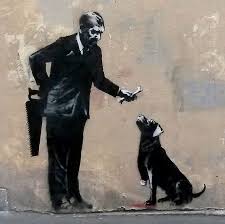
When I moved to Paris when I was 17, I spent countless hours exploring my surroundings on foot, mostly after dark. Self-proclaimed flâneurs will know that mindless walking is truly an exercise of trial and error — for every serendipitous discovery comes a heaving side street full of American tourists. One night, I nonchalantly walked up an unassuming side street, before being startled by an intruder, Banksy’s saw-carrying man feeding his dog.